
Month: December 2025
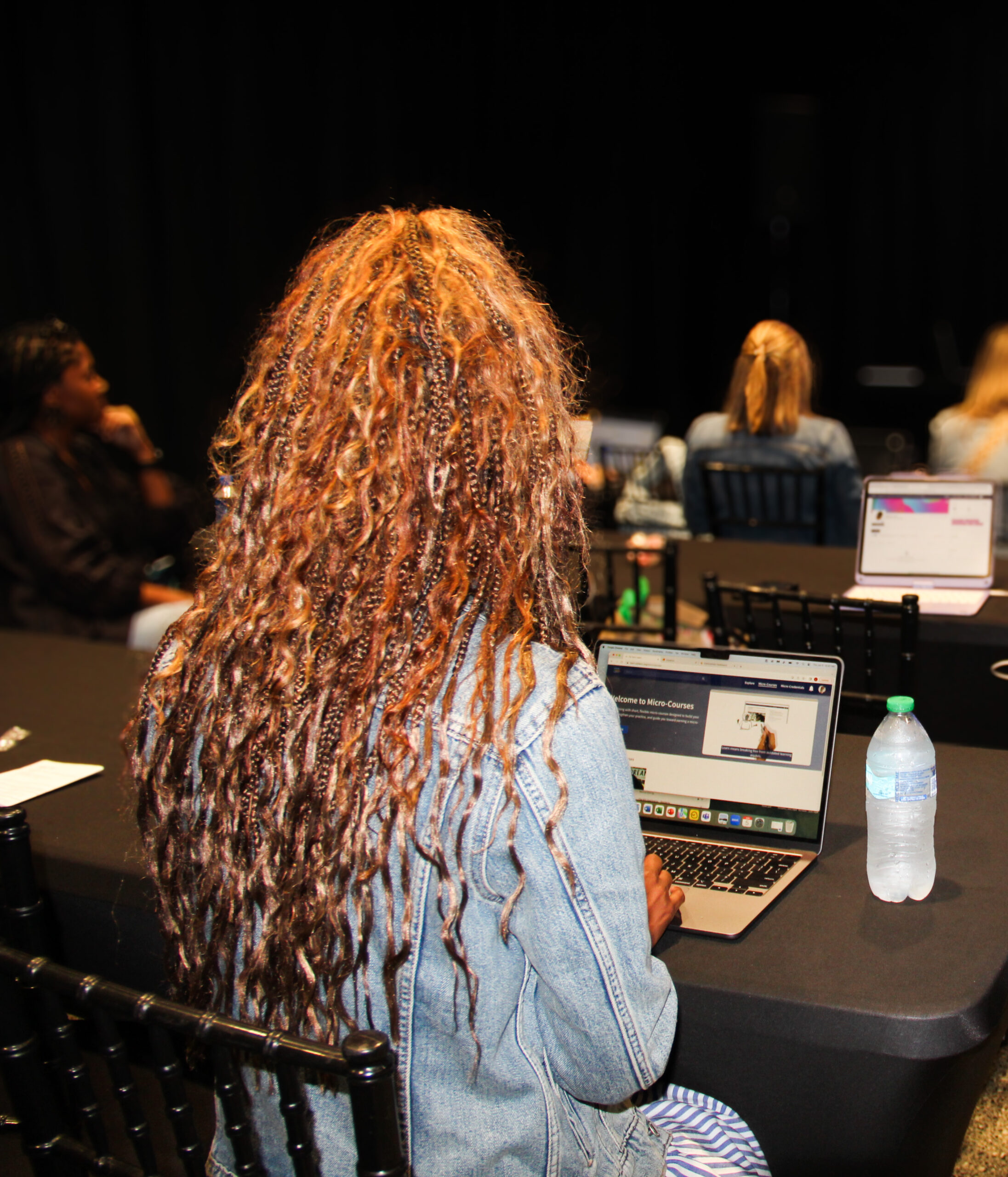
Micro-Credentials: Advancing Educator Agency Through Competency-Based Professional Learning
Educators are continuous learners. Yet too often, professional learning opportunities fail to reflect the complexity of their work. Sessions are generalized, disconnected from classroom realities, and rarely result in measurable improvement.
In contrast, micro-credentials offer a more relevant and effective approach, one that recognizes professional learning as a process of inquiry and application. At Mira Education, we have seen how micro-credentials not only validate educators’ skills but also strengthen their capacity to lead learning and improvement within their own systems.
Driving Improvement
Mira Education partners with P20 education organizations to activate collective leadership as a driver of improvement. Our work focuses on three interconnected areas:
- Competency-based professional learning to identify and develop educators’ capacity for transformational change
- Strategic planning, coaching, and facilitation to accelerate collectively led improvement across teams and systems
- Tools and models that scale what works, advancing equity, effectiveness, and sustainable educator support
Our micro-credential development work sits at the intersection of these priorities, helping systems transform professional learning into a structured, evidence-based pathway for educator growth and leadership.
The Challenge: Limited Personalization in Professional Learning
Despite decades of reform efforts, professional learning for educators remains largely compliance-driven. Many opportunities are broad in scope and lack clear application to the contexts in which educators operate. As a result, professional learning is often perceived as time-consuming, low-impact, and disconnected from meaningful outcomes.
Educators need learning experiences that are:
- Personalized to their professional goals and local contexts,
- Grounded in authentic challenges of practice, and
- Recognized as credible measures of growth and leadership.
Micro-credentials address these needs by providing a structure for continuous, evidence-based professional learning.
A Practice-Anchored Approach
Micro-credentials are competency-based certifications that recognize demonstrated proficiency in discrete, practice-aligned skills. Each credential is designed around authentic performance tasks, enabling educators to apply and document their learning in real school settings.
This approach transforms professional learning from a passive experience into an active process of problem-solving and reflection. Educators learn by doing and by demonstrating how their learning drives improvement in outcomes for students and systems.
Evidence of Impact
In partnership with the University of Maryland’s School Improvement Leadership Academy (SILA), Mira Education co-developed two micro-credentials designed to assess proficiency in implementing equitable practices and applying improvement science to address systemic challenges.
This model is yielding measurable results. As of April 2025, 116 enrolled Fellows have earned 136 micro-credentials, and participation continues to grow.
To sustain quality and scalability, Mira Education also trained seven practitioners to serve as certified assessors, facilitating initial training and ongoing calibration sessions to ensure alignment and rigor.
Early outcomes from these partnerships demonstrate that micro-credentialing can:
- Support educators in addressing context-specific needs within their schools,
- Build collective capacity for problem-solving and system change, and
- Reinforce structures that sustain continuous improvement.
Why This Work Matters
Micro-credentials represent a fundamental shift in how professional learning is designed, delivered, and recognized. They move beyond seat time to focus on competence demonstrated in practice, providing a clear and credible measure of growth.
More importantly, they return ownership of professional learning to educators themselves, enabling them to identify priorities, test strategies, and lead improvement from within their own contexts. In this way, micro-credentials do more than codify skills. They cultivate agency, reflection, and collective leadership.
Partnering for System Impact
Mira Education collaborates with higher education institutions, state departments, and school systems to design and implement micro-credential frameworks that align with local priorities and capacity. Each partnership is customized to ensure that micro-credentials are rigorous, relevant, and actionable, driving both individual growth and organizational improvement.
To learn more about how Mira Education can support your organization in developing or expanding a micro-credentialing strategy, visit www.miraeducation.org or contact our team.

Beyond Burnout: Rethinking Support for District Leaders
The Cost of Carrying It All
Every few months, a new headline confirms what many district leaders already know: the job of a superintendent is becoming harder to sustain.
RAND’s 2025 State of the Superintendent survey found that fewer district leaders believe the stress is worth it. Only about half of the respondents agreed that the challenges of the role feel worthwhile, representing a sharp drop from previous years, ultimately leading to the question: why stay? It’s a sentiment growing across roles in the education field.
So, what’s happening?
RAND researchers highlight a potential disconnect: many superintendents are spending time on tasks that don’t align with their vision of leadership, such as facility management, budgeting, and addressing daily operational issues that keep districts running. The irony is that while district size and local politics may shape the pressures of the job, the purpose remains the same across contexts: to create the conditions where great teaching and student learning can thrive.
Burnout Isn’t About Weakness. It’s About Structure.
At Mira Education, we often say burnout isn’t a sign that leaders are doing something wrong. Rather, it’s a sign that the system isn’t built to share leadership well. When too many critical functions run through the central office, the system itself weakens. In most districts, even well-run ones, leadership systems are designed around one singular hub, and every challenge, from staffing shortages to school safety, runs through a narrow channel. Unsustainable pressure isn’t a reflection of an individual leader or office, but a system that is stretched too thin.
It’s no wonder the work feels unsustainable. When leadership isn’t shared, that pressure compounds.
But what if the solution isn’t just more self-care or “work-life balance” training? What if it’s reimagining how leadership itself works?
What Sustainable Leadership Looks Like
In our work with districts nationwide, we’ve seen this come to life in three powerful ways:
1. Clarifying Work Structures – Superintendents and cabinet teams co-create decision-making practices that clarify who leads, who contributes, and how information flows. These structures make collective leadership possible without chaos or duplication. They also allow the superintendent to focus on strategic leadership rather than operational triage.
Tool Spotlight: The Collective Leadership Conditions Matrix: Team Discussion Tool helps teams identify where decision-making or communication bottlenecks exist and how to share ownership more effectively.
2. Strengthening Communication Routines – The most effective leaders co-create predictable, shared rhythms for communication, ones that keep teams aligned without constant check-ins. When communication becomes routine rather than reactive, superintendents regain time and mental bandwidth to think deeply about system improvement.
Tool Spotlight: The Inclusive Communications Discussion Tool guides teams in co-creating norms and channels for clear, purpose-driven communication.
3. Aligning Time and Purpose – Time is a mirror of system design. When superintendents spend most of their days putting out fires, it signals that the leadership structure, rather than the individual, is out of balance. By using tools like improvement cycles, role mapping, and self-reflection, leaders can ensure that time and effort align with district priorities.
Tool Spotlight: The Educator Time Tracker guides superintendents through a three-day self-reflection on time use, enabling them to understand better where and how they spend their time. This allows them to identify trends and make adjustments aligned with their daily and weekly priorities.
Collective leadership offers a structural alternative. Rather than concentrating authority and problem-solving at the top, it creates conditions that enable leadership to be exercised across roles and levels.
When a superintendent leads within a collective leadership framework, they don’t carry every responsibility alone. Instead, they build clear, collaborative systems that distribute thinking, decision-making, and communication in ways that make the district more adaptive and far less fragile.
How are district leaders responding?
We’ve asked current and former district leaders in our network to share how they’re sustaining good work even in high-stress contexts. Their reflections reveal a common thread: sustainable leadership is about intentional structure, connection, and purpose—not heroic endurance.
Dr. Almudena (Almi) G. Abeyta, Superintendent, Chelsea Public Schools, emphasized that the work’s meaning sustains her even on the toughest days:
“For me, especially on the hard days, I remember that I choose to do this job—and that it’s a calling. When the days are hard, whether it’s upset community members or difficult negotiations, I remember it’s about the kids we’re able to impact as a team and the lives we’re changing. In our district, we talk about knowing our students by name, strength, and story… and that’s why I continue to fight and do what I do.”
Dr. Shelly Armstrong, Supervisor of Student Support, shared a simple but powerful weekly structure she calls her “three P’s”:
“A routine that I practice weekly is my three P’s: Priorities, People, and Personal.
I look at what actions directly support district priorities such as student achievement, staff development, or family engagement. I intentionally check in with teams or individuals who may need extra support, encouragement, or recognition. Sustaining good work is about maintaining morale and relationships. I exercise daily, practice gratitude, plan trips, and nurture my relationships.
This structure helps keep me grounded, focused on what’s best for students, and hopefully provides a model for other staff.”
Dr. Kevin Gilbert, Assistant Superintendent, Howard County Public School System, noted that consistent reflection and data review are critical to keeping the system aligned:
“Constantly reviewing data like enrollment, budget, academic, discipline, and more helps me stay focused on district priorities.”
Dr. Carol Kelley, Superintendent, Salem City School District, shared how staying grounded in her “why” and her support network keeps her centered:
“I think you have to remember your why—literally every moment of the day. And I think it’s probably the number one. And then number two, you really have to depend on your support and be intentional about that. And support means your team, yes, but also that group of people who get it, and are a safe space for you. So, literally every Wednesday morning, I have a call with a superintendent friend of mine. It’s our opportunity just to vent… remembering your why and having that circle of support.”
Dr. Ethan Lenker, former Superintendent and current Mira Education partner through STEM East, spoke to the discipline of decision-making in high-pressure moments:
“During stressful situations, people tend to get tunnel vision and rely on gut feelings. Using all available resources—data, colleagues’ expertise, policies, and networks—brings multiple viewpoints into the process. It leads to more strategic, well-supported decisions and models collaborative leadership. Over time, people feel empowered to contribute ideas and support one another during challenges.”
Patrick Miller, former Superintendent and Mira Education partner through STEM East, reflected on leadership through connection and presence:
“One thing that I always tried to do and push on my leadership team is complain up. I encouraged my team and principals to come to me to discuss or vent, not to their subordinates. [The unexpected], such as COVID, book challenges, and budget constraints, all affect people differently, and they needed a safe place to share. For me, being level-headed helped give my staff reassurance. During tense times, I spent more time in schools and community functions—being visible helped people feel at ease.”
Looking Ahead
If fewer superintendents are saying the job feels “worth it,” maybe that’s not a signal for leaders to leave, but a signal for systems to change.
The future of sustainable leadership isn’t about building more personal resilience. It’s about building collective capacity so that the weight of leadership doesn’t crush the people holding it. Because sustainable leadership isn’t about surviving the job, it’s about building systems where thriving is possible.
References
Peetz Stephens, Caitlynn. 2025. “A Growing Number of Superintendents Say the Job Stress Isn’t Worth It.”
Education Week. https://www.edweek.org/leadership/a-growing-number-of-superintendents-say-the-job-stress-isnt-worth-it/2025/10.
Shapiro, Anna and Heather L. Schwartz, State of the Superintendent: Selected Findings from the Spring 2025 American School District Panel. Santa Monica,
CA: RAND Corporation, 2025. https://www.rand.org/pubs/research_reports/RRA956-36.html.